

This workshop is made possible through support from the University of Toronto's LEAF+ Award program, which supports innovative teaching and learning initiatives.
This workshop examines how thoughtful prompting and structured interaction with LLMs can improve communication, reduce defensiveness, and encourage intellectual humility in academic settings.
Explore how prompting strategies shape AI outputs, and how AI can facilitate more constructive and empathetic dialogue rather than reinforcing confirmation bias.
Through realistic academic scenarios and live demos, learn how AI can structure complex communications, de-escalate friction, and support objective perspective-taking.
Learn to interrogate AI outputs for hidden assumptions, prompt sensitivity, and algorithmic bias — developing the analytical skills to use LLMs responsibly in research contexts.
Co-create practical resources including a digital toolkit and event summary to guide future academic initiatives and networking opportunities.
By the end of the workshop, participants will have developed practical competencies at the intersection of AI, communication, and academic research.
Apply LLMs to structure and clarify complex academic communications and research viewpoints.
Demonstrate AI-assisted perspective-taking (e.g., "steel-manning") to objectively summarize and compare opposing scholarly arguments.
Formulate practical strategies for using AI to de-escalate academic friction and promote civil, inclusive discussion.
Critique AI outputs for algorithmic bias and ethical implications within the context of graduate-level research and dialogue.
Equip yourself with skills to critically evaluate and refine AI prompts to mitigate bias in research contexts.
Co-create practical resources including a digital toolkit to guide future academic AI initiatives.
A focused 90-minute journey through discourse, demonstration, and dialogue.
During the workshop, we'll walk through our curated AI toolkit live, showing how the quality of a prompt directly shapes the quality of a conversation. Rather than generic AI advice, every example in the toolkit is drawn from real academic friction points: disagreements over data interpretation, difficult supervisor feedback, and navigating authorship disputes.
Participants will see how small changes in phrasing — asking the model to steelman an opposing view, or to flag assumptions in your own argument — can shift a defensive exchange into a productive one.
Side-by-side prompt comparisons showing how phrasing choices change AI outputs in academic dialogue scenarios.
Ready-to-use prompt templates for steel-manning arguments, requesting constructive feedback, and de-escalating academic tension.
A take-home reference guide co-created with participants during the session, shared openly after the event.
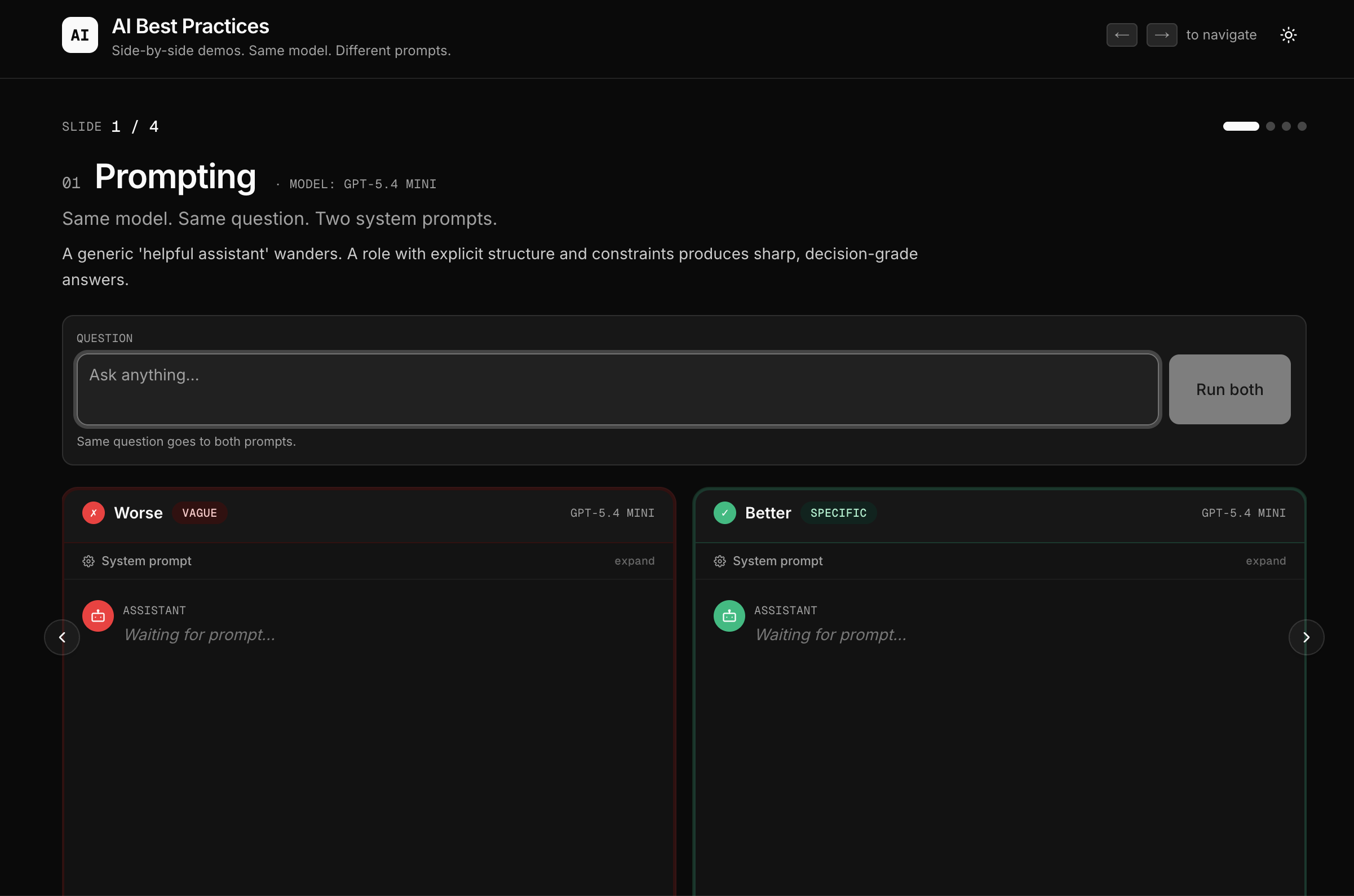 Live Demo
Join us June 17, 2026 at 5 PM via Zoom. Open to University of Toronto trainees, researchers, and faculty.
Register via Zoom