

AI, Academia, and the
Art of Dialogue:
Exploring LLMs in Clinical & Scientific Research
This workshop was made possible through support from the University of Toronto's LEAF+ Award program, which supports innovative teaching and learning initiatives.
Beyond Productivity — AI as a Bridge for Better Dialogue
This workshop examined how thoughtful prompting and structured interaction with LLMs can improve communication, reduce defensiveness, and encourage intellectual humility in academic settings. The full session and the toolkit it produced are archived below.
Civil Discourse & Collaboration
Explore how prompting strategies shape AI outputs, and how AI can facilitate more constructive and empathetic dialogue rather than reinforcing confirmation bias.
Hands-On Demonstrations
Through realistic academic scenarios and live demos, learn how AI can structure complex communications, de-escalate friction, and support objective perspective-taking.
Critical Evaluation of AI
Learn to interrogate AI outputs for hidden assumptions, prompt sensitivity, and algorithmic bias — developing the analytical skills to use LLMs responsibly in research contexts.
Digital Toolkit & Community
Participants co-created practical resources — including the digital toolkit and event summary — to guide future academic initiatives and networking opportunities.
Meet the Presenters
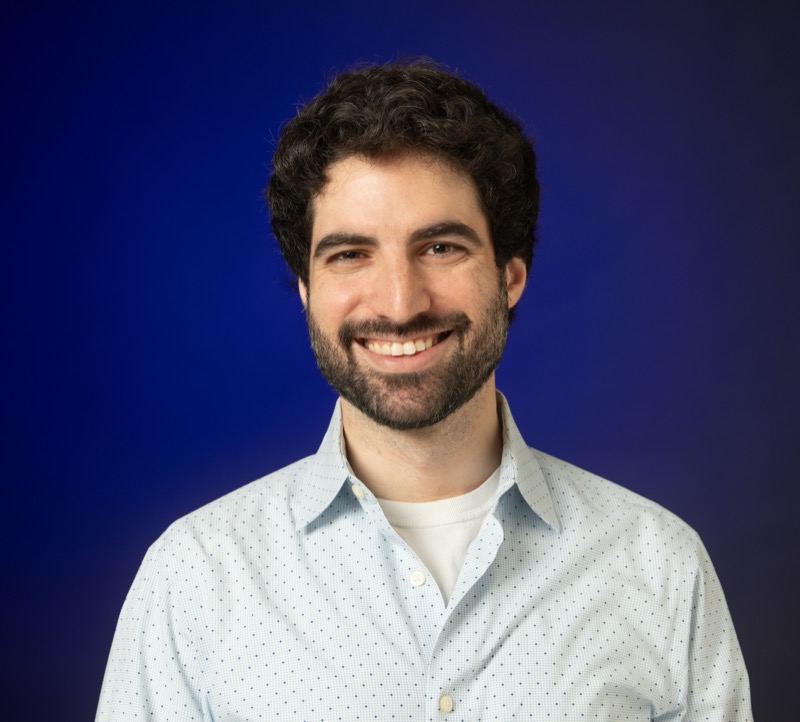
Dr. Ariel Lefkowitz
Dr. Ariel Lefkowitz is an Internal Medicine physician and the Education Lead for the Division of General Internal Medicine at Sunnybrook Health Sciences Centre, a scholar at The Wilson Centre for Research in Education, and an Assistant Professor at the University of Toronto Temerty Faculty of Medicine, where he lectures on many topics, including communication, professional boundaries, moral courage, and managing the self. His scholarly interests include ethics, equity, professionalism, and civil discourse.
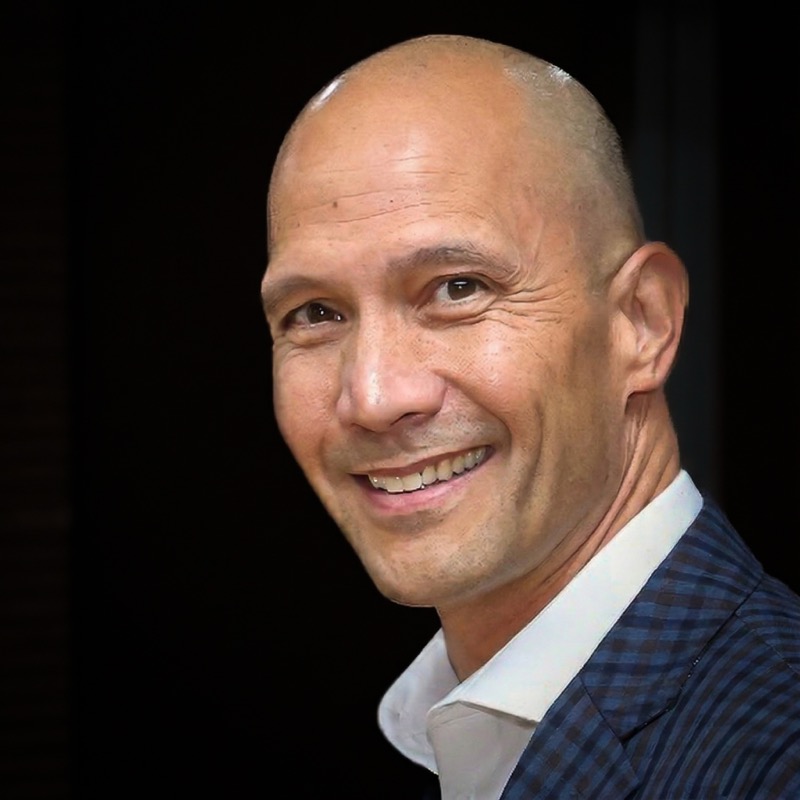
Dr. Pascal Tyrrell
Pascal Tyrrell is an accomplished data scientist and the Director of Data Science at the University of Toronto's Department of Medical Imaging, within the Temerty Faculty of Medicine. He also holds appointments in the Institute of Medical Science, where he serves as Director of Equity, Diversity, Indigeneity, Inclusion, and Accessibility, and in the Department of Statistical Sciences as an associate professor. He is a Community-Engaged Learning Faculty Fellow at the University of Toronto, recognizing his leadership in advancing community-engaged scholarship. He is also an Affiliate Scientist at the Schwartz Reisman Institute for Technology and Society, contributing to interdisciplinary research at the intersection of technology, ethics, and society. His research focuses on applying cutting-edge Artificial Intelligence to medical image analysis, driving improved health outcomes globally. Additionally, Pascal is a serial entrepreneur with expertise in computer software, medical devices, and agri-tech.
What the Session Covered
By the end of the workshop, participants had developed practical competencies at the intersection of AI, communication, and academic research.
Apply LLMs to structure and clarify complex academic communications and research viewpoints.
Demonstrate AI-assisted perspective-taking (e.g., “steel-manning”) to objectively summarize and compare opposing scholarly arguments.
Formulate practical strategies for using AI to de-escalate academic friction and promote civil, inclusive discussion.
Critique AI outputs for algorithmic bias and ethical implications within the context of graduate-level research and dialogue.
Equip yourself with skills to critically evaluate and refine AI prompts to mitigate bias in research contexts.
Co-create practical resources including a digital toolkit to guide future academic AI initiatives.
Workshop Structure
How the 90 minutes unfolded — discourse, demonstration, and dialogue. Each segment appears in the recording below.
Opening & Welcome
Civil Discourse in Academia
Live Demo: The AI Mediator & Digital Toolkit
Interactive Small Group Sessions
Debrief, Q&A & Open Discussion
Closing Remarks & Networking
Prompting for Civil Discourse — Now Open to Everyone
During the workshop we walked through our curated AI toolkit live, showing how the quality of a prompt directly shapes the quality of a conversation. Rather than generic AI advice, every example in the toolkit is drawn from real academic friction points: disagreements over data interpretation, difficult supervisor feedback, and navigating authorship disputes.
The toolkit is now openly available — see how small changes in phrasing, such as asking the model to steelman an opposing view or to flag assumptions in your own argument, can shift a defensive exchange into a productive one.
Side-by-side prompt comparisons showing how phrasing choices change AI outputs in academic dialogue scenarios.
Ready-to-use prompt templates for steel-manning arguments, requesting constructive feedback, and de-escalating academic tension.
A take-home reference guide co-created with participants during the session, shared openly after the event.
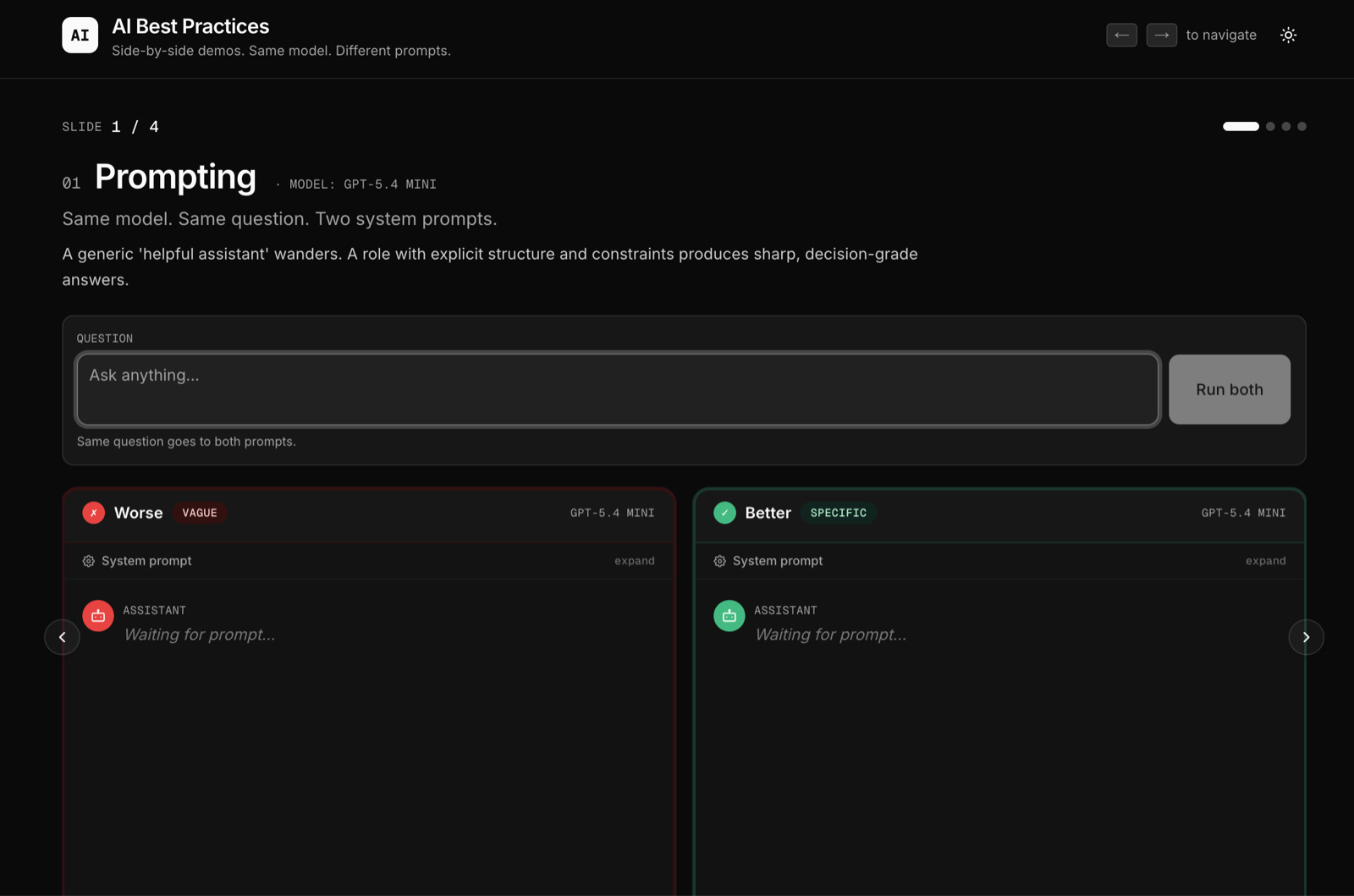 Live Demo
Missed It? Watch the Full Session
The complete recording of the June 17, 2026 workshop — including the live toolkit demo — is available to watch in full.